
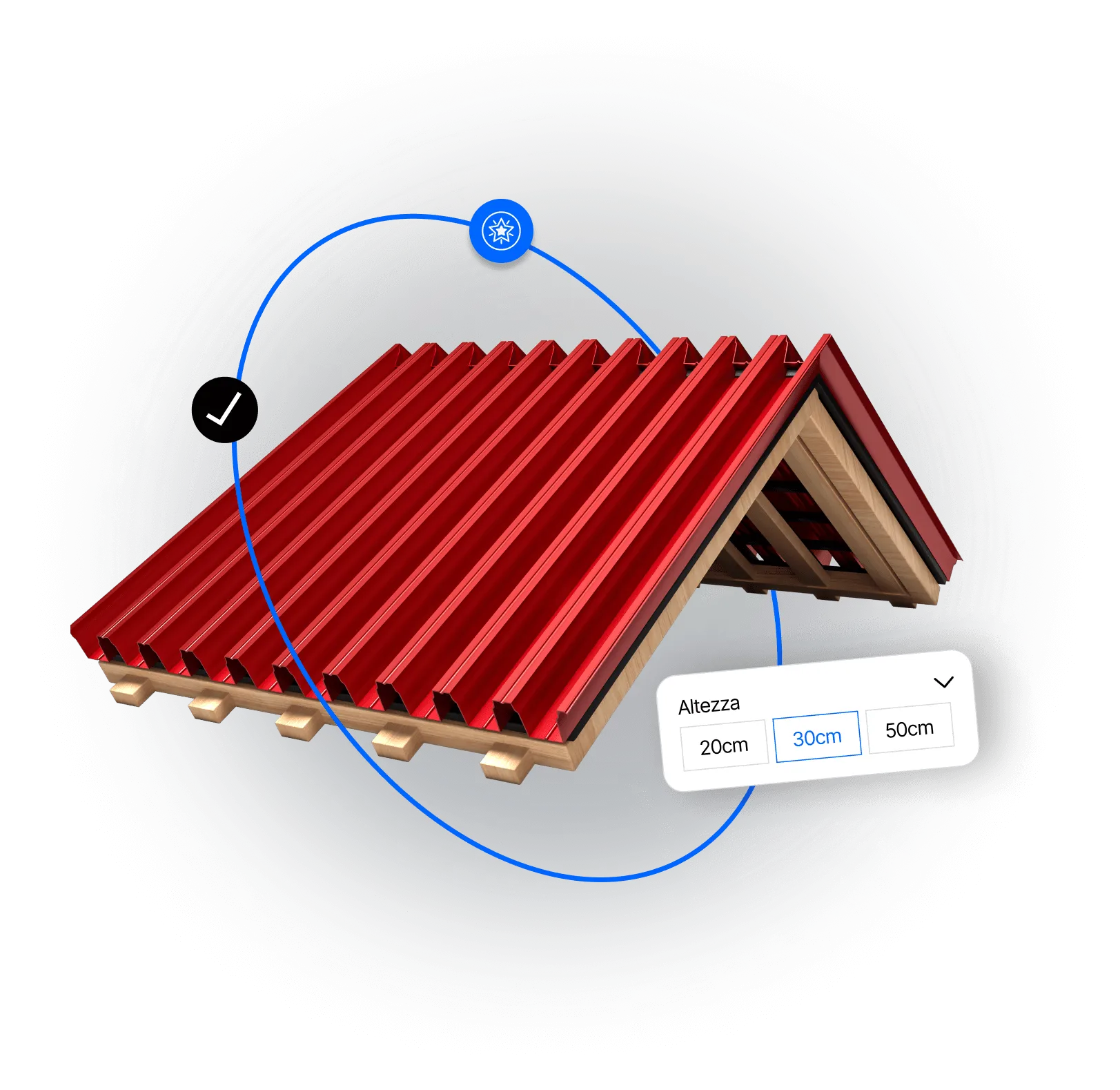
The construction sector is particularly well suited to the adoption of 3D configurators and 3D viewers. In the construction process, the ability to preview and modify specific aspects of a project can significantly reduce misunderstandings and discrepancies that often arise between the client’s vision and the interpretation of builders and engineers. 3D configurators make it possible to apply and visualize changes in real time, facilitating informed and shared decision-making while improving overall client satisfaction.
For developers and builders, 3D configurators offer the opportunity to present clients with various layout configurations, finishes, colors, and other architectural elements without the need for costly physical samples or mockups. This not only helps optimize costs but also encourages greater client involvement in the creative process, increasing the likelihood that the final result meets their expectations.
The adoption of 3D configurators in the construction sector not only speeds up and simplifies the design phase but also contributes to better resource management and waste reduction through more accurate planning. Furthermore, the ability to explore and resolve design issues virtually before physical construction can lead to significant time and cost savings, avoiding errors and late-stage modifications.